Le Baigneuse 1922
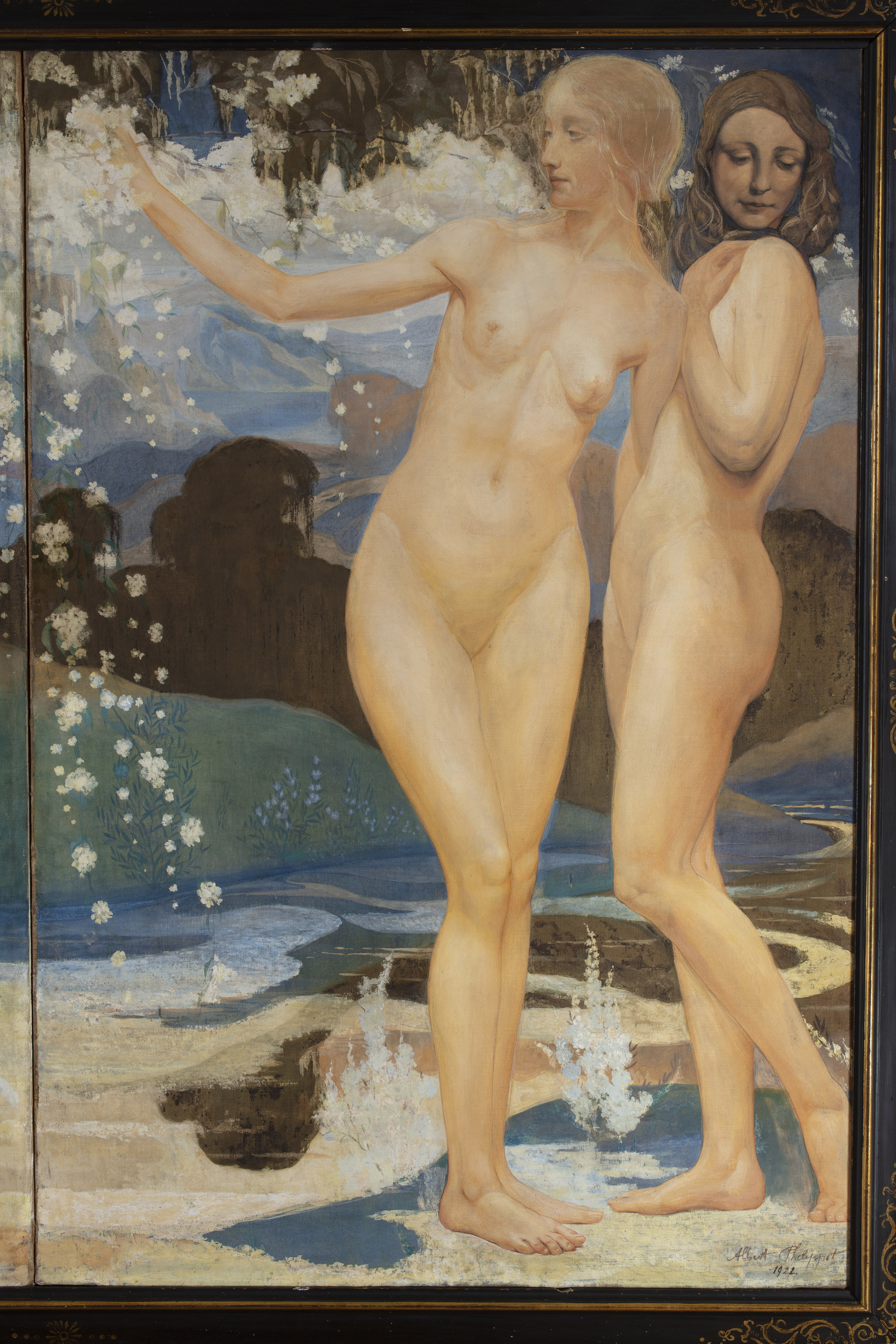
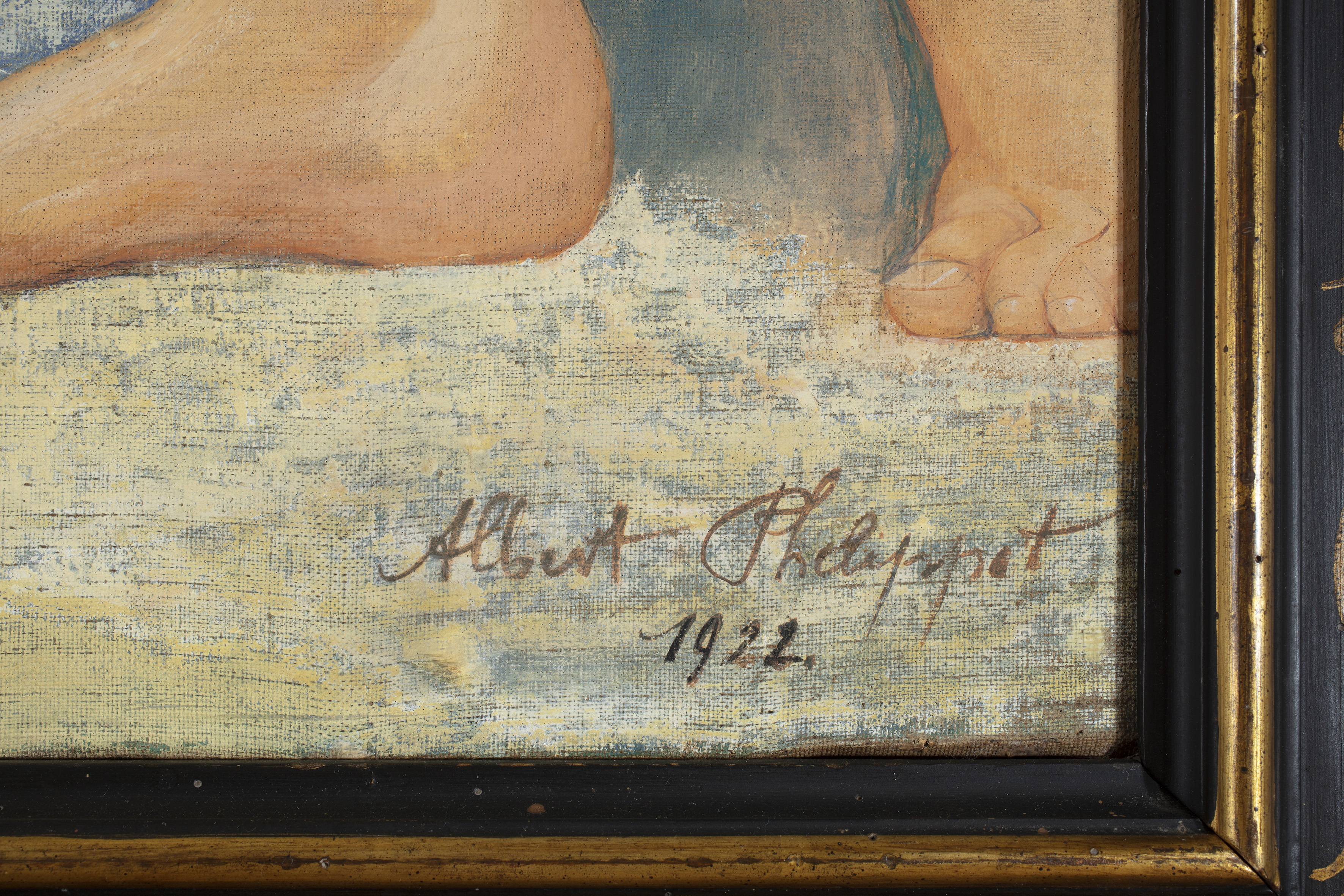
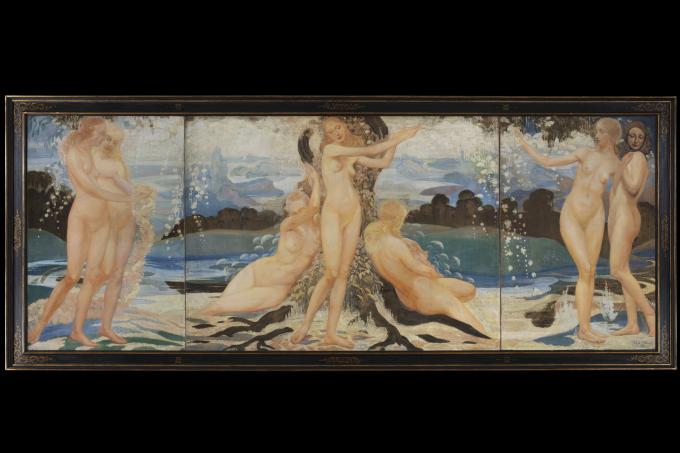
Albert Philippot (1899–1974), Le Baigneuse 1922, oil on canvas, triptych measuring 151 x 400 cm, in a period frame.
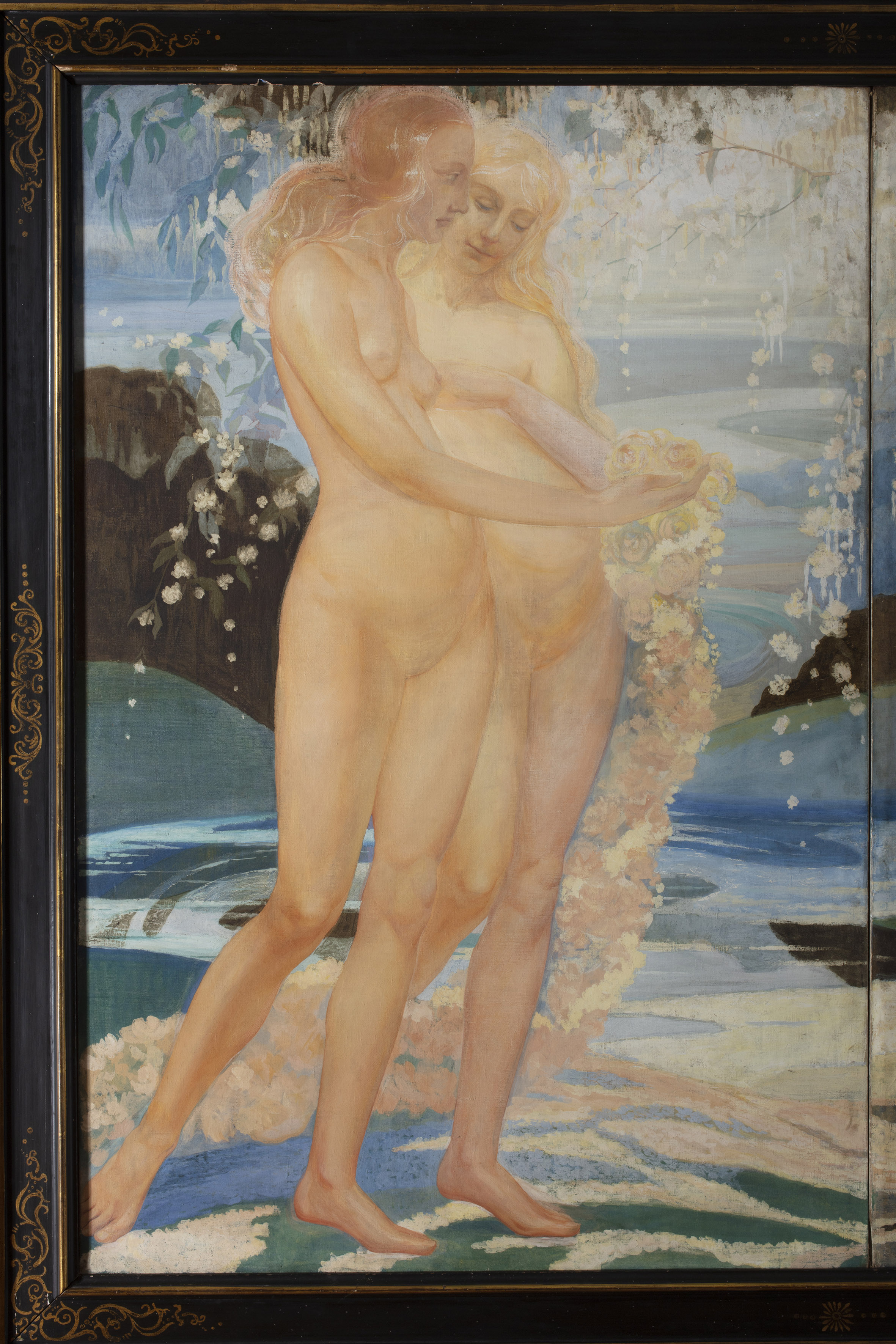
This work, executed on three canvases and impressive in scale, is an exquisite example of the monumental decorative painting to which the artist devoted himself starting in the 1920s.
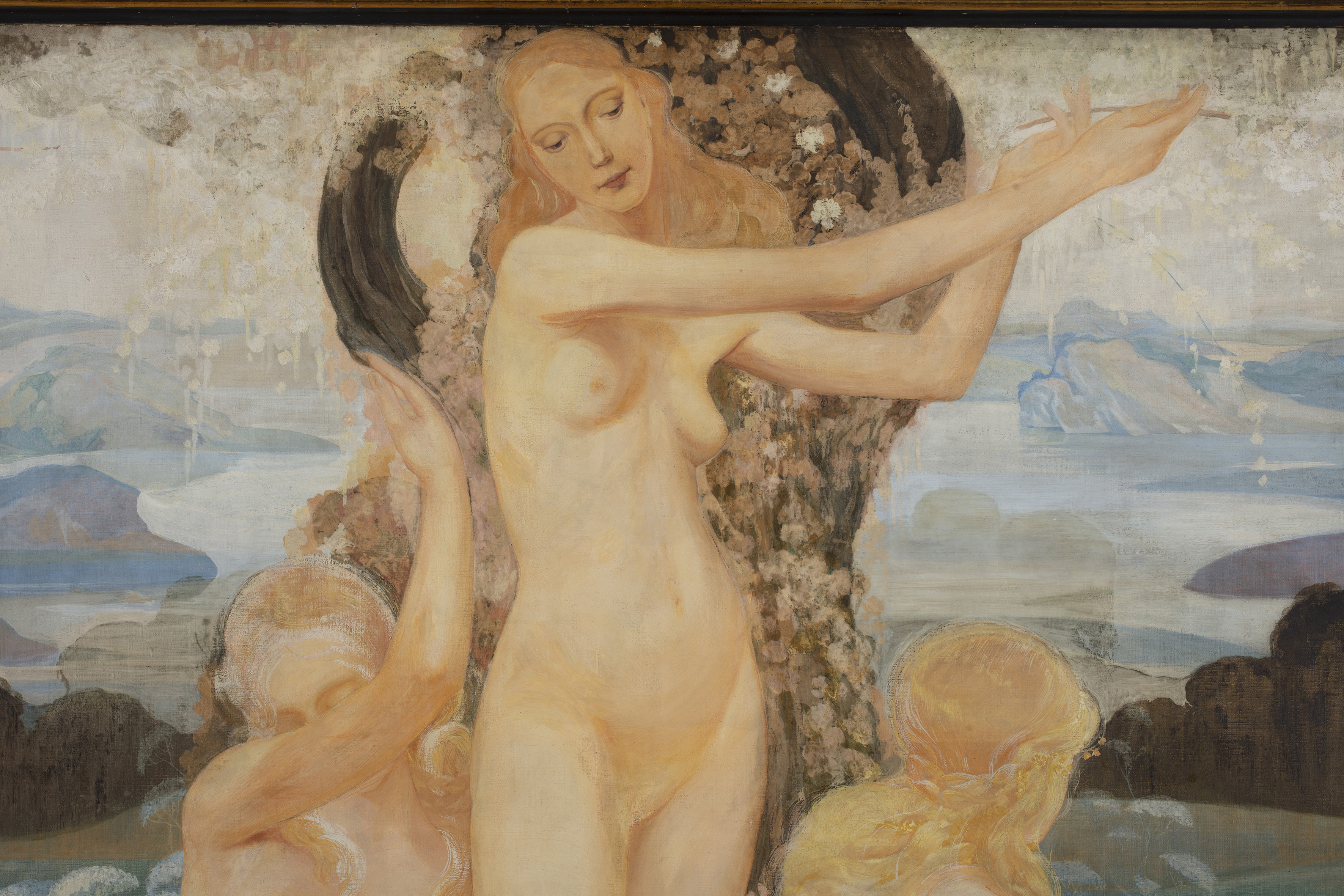
Clearly Art Nouveau in inspiration, the triptych depicts female nudes immersed in a dreamlike seascape; in the background, undulating, sinuous lines form small islands that blend into the sky, while in the foreground, those same curves define the waves and the sea foam washing against the shore.
The landscape is rendered in a two-dimensional style, featuring sharp outlines and large areas of color—a technique reminiscent of Japanese prints.
The female figures, painted in near life-size, seem to float and at times vanish against this ethereal, intangible backdrop, emerging from the seawater. Their flawless complexions and golden hair make them appear more like mystical beings—sirens—than flesh-and-blood women. The work bears a striking resemblance to the style of Botticelli, evident in both the figures’ poses and their faces.
The vegetation—comprising a large central trunk and a myriad of tiny, pure white blossoms—also reflects the sublime aesthetic that characterizes the entire piece; the inclusion of Queen Anne’s lace, faithfully depicted at the feet of the central maiden, symbolizes purity and femininity. Above, a wispy cascade of wisteria blossoms delicately frames the scene. Philippot’s technique features broad, almost opaque, and impasto-like brushstrokes, alternating subtle gradations with intense blocks of color. In places, the graphite underdrawing remains visible, creating a deliberately unfinished effect. The cool-toned palette heightens the viewer’s sense of standing before an imaginary place—a celestial mirage shrouded in mist.
| Year | 1922 |
| Dimensions | 151 x 400 cm |