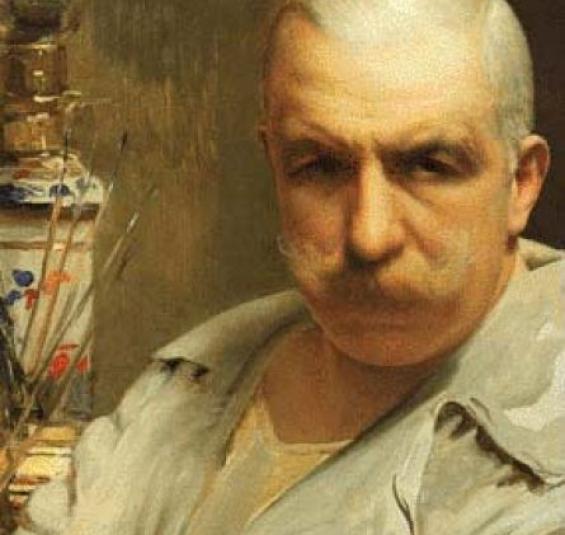
Vittorio Matteo Corcos
Livorno 1859 - Florence 1933
Vittorio Matteo Corcos was born in Livorno on October 4, 1859, to a middle-class Jewish family. His father, Isach, was a merchant, while his mother, Giuditta Baquis, came from a cultured background. Vittorio demonstrated a strong aptitude for drawing from an early age, which his parents encouraged, allowing the young man to attend Giuseppe Baldini's classes in his hometown. In 1875, he enrolled at the Academy of Fine Arts in Florence to continue his studies, winning a silver medal for merit.
To complete his education, Corcos felt the need to study with Domenico Morelli; so, thanks to a scholarship from the Municipality of Livorno, he moved to Naples, where he was admitted to the Academy of Fine Arts. The work "Arab in Prayer" (1880) dates from this period, purchased by King Umberto I from the Promotrice Salvator Rosa and now in the collection of the Capodimonte Museum.
After graduating in the fall of 1880, he moved to Paris, where he initially made ends meet by painting fans and musical scores for the publisher Heugel. A chance meeting with Giuseppe de Nittis introduced him to the Maison Goupil, where he met Degas, Manet, Zola, and the writer he most admired, Daudet. In Paris, he studied with Léon Bonnat, embodying his formal rigor and high level of psychological rendering in portraiture.
In 1881, he signed a fifteen-year contract with the art dealer Adolphe Goupil, which brought him international success.
Five years later, he returned to Italy and settled in Florence, where he met Emma Ciabatti, widow of the Rotigliano family, a cultured and refined woman with a lively literary career.
The two married, forming a close-knit couple, both in their private lives and in the cultural world: Emma introduced Corcos to Florentine literary salons, successfully strengthening his connections with the intellectual world of the time. Over the years, the couple hosted artists and writers such as Carducci, Pascoli, and D'Annunzio in their home.
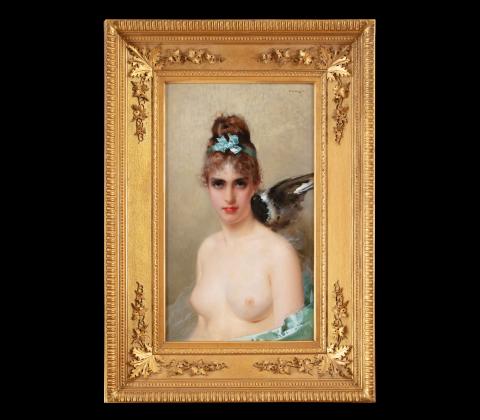
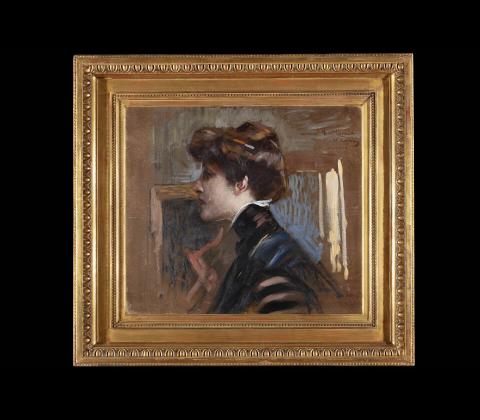
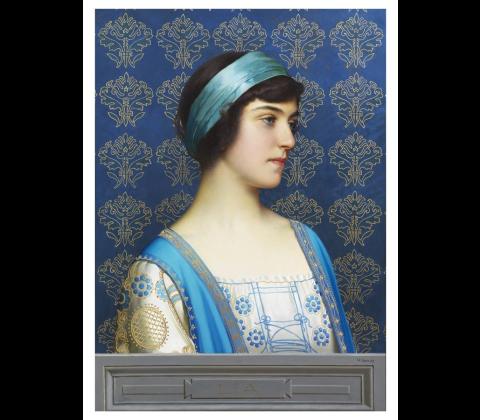
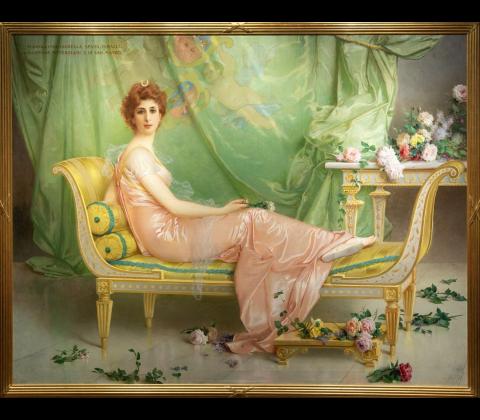
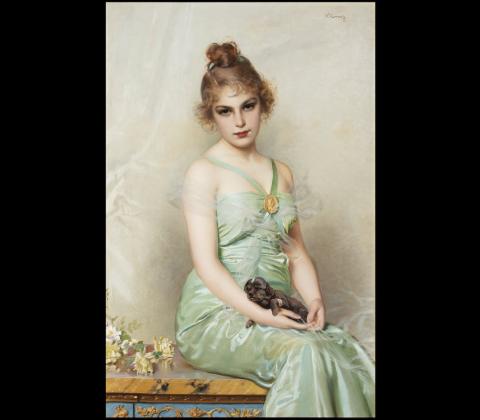
Among his best-known works is Dreams (1896), now at the Galleria Nazionale d'Arte Moderna in Rome: a female portrait expressing introspection and modernity, recurring elements in the artist's oeuvre.
The model was Elena Vecchi, daughter of the writer and naval officer Augusto Vecchi, known by the pseudonym Jack La Bolina. Raised in a cultured and progressive environment, Elena represented for Corcos an ideal of modern and independent femininity. Their intense artistic and personal bond resulted in a work that became a symbol of the new woman of the Belle Époque: emancipated, thoughtful, and self-aware.
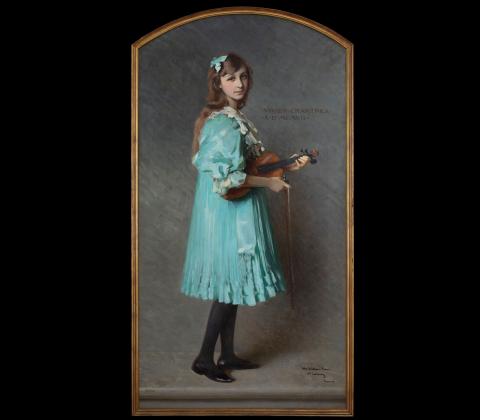
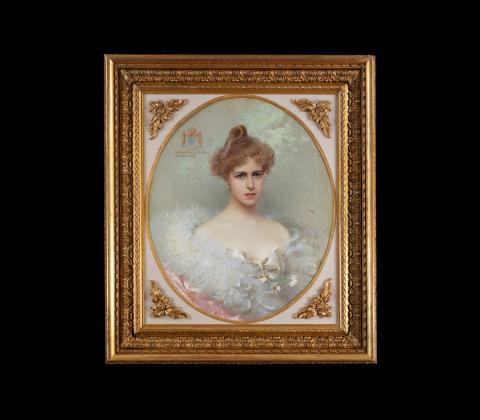
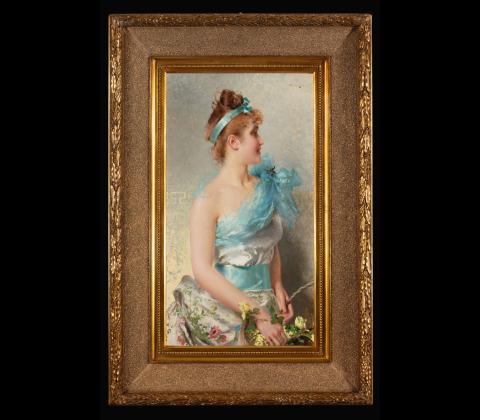
The celebrated Ugo Ojetti commented on his poetics: "Corcos does not paint women, but the idea that women have of themselves. He does not portray, he interprets."
He died in Florence on November 8, 1933, and his wife Emma followed him a few days later, on November 24 of the same year.
Although most of his works are held in private collections, some of his paintings can be seen at the Uffizi, the GAM in Florence, the Galleria Nazionale d'Arte Moderna in Rome, and the Museo Civico in Livorno. Corcos's painting, so refined, ethereal, and sensual, is today among the most sought-after among collectors.