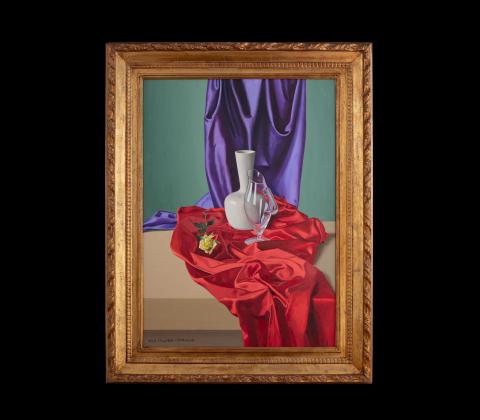
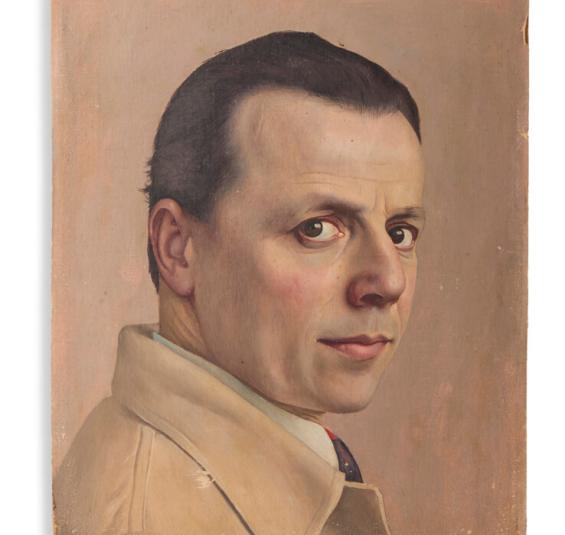
Ugo Celada da Virgilio
Borgo Virgilio 1895 - Varese 1995
Celada was born in Cesere di Virgilio, in the province of Mantua, on May 25, 1895. He began his interest in art as a child, despite his father's opposition. He began his education at the School of Arts and Crafts in Luzzara (Reggio Emilia), completing it with distinction. He received a scholarship from the Franchetti Institute and enrolled at the Brera Academy. He studied under Cesare Tallone. In 1914, he had to interrupt his studies to enlist, but he put his talents to good use compiling topographical maps.
After the war, he left for Paris, but his journey stopped in Genoa, where he remained to work for a few months. In 1920, he participated with a work at the Venice Biennale. He also participated in 1924. From 1920 to 1926, Celada made his name on the international scene: he exhibited at the Permanente in Milan, and in 1926, his painting for the Venice Biennale was praised by Emile Bernard, who discovered Van Gogh and Cézanne. The following year, Celada managed to reach Paris, where he painted portraits. Upon returning to Italy, he participated in numerous exhibitions around the country.
In the 1930s, Celada, despite being outside the regime's cultural circles, continued to work assiduously. After the Second World War, he focused primarily on portraits and still lifes.
He died in Varese on January 26, 1995.