
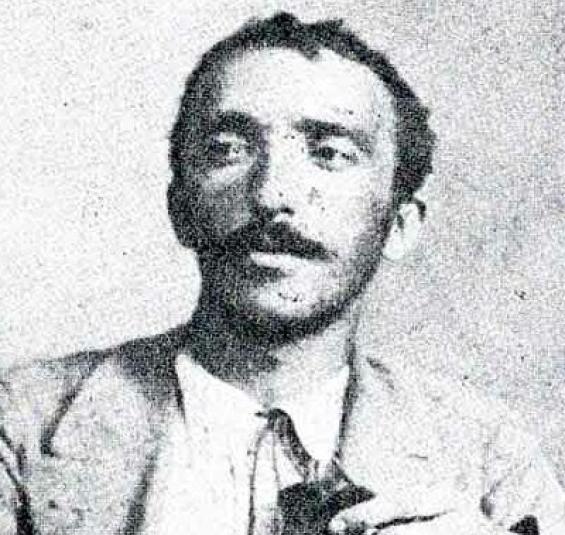
Plinio Nomellini
Livorno 1866 - Florene 1928
Plinio Nomellini was born on August 6, 1866, in Livorno. After studying at the local School of Arts and Crafts under the painter Natale Betti, he won a scholarship to the Academy of Fine Arts in Florence in 1885. There, he became a student of Giovanni Fattori—a leading artist of the Macchiaioli movement—and befriended painters such as Silvestro Lega and Telemaco Signorini.
Nomellini initially painted in the Macchiaioli style, characterized by bold brushstrokes of color and naturalistic plein-air scenes. However, towards the end of the 1880s, he began experimenting with brighter palettes and more expressive brushwork.
In 1890, he moved to Genoa, where he became a central figure in the city's artistic renewal. Influenced by French Neo-Impressionism and Italian Divisionism, he adopted the technique of placing pure colors side by side to create luminous effects. His paintings from this period often depicted laborers, shipyards, and scenes of daily work, reflecting his growing interest in social issues.
Around the turn of the century, Nomellini shifted towards a more Symbolist style, combining the luminous Divisionist technique with allegorical and poetic themes. In 1902, he settled in Torre del Lago, Tuscany, where he befriended the composer Giacomo Puccini and the poet Giovanni Pascoli. The landscapes of the Versilia region became a recurring subject, often imbued with dreamlike or symbolic meaning.
After World War I, he returned to Florence, dedicating himself increasingly to landscape painting while continuing to exhibit widely. From 1928 until his death in Florence on August 8, 1943, he served as president of the Gruppo Labronico, an important association of artists from Livorno. His paintings are held in major Italian museums, including collections in Florence, Venice, Genoa, and Rome.
Today, he is recognized as one of the most important Italian Divisionist painters, celebrated for combining technical innovation, social commitment, and lyrical interpretations of the Italian landscape.