
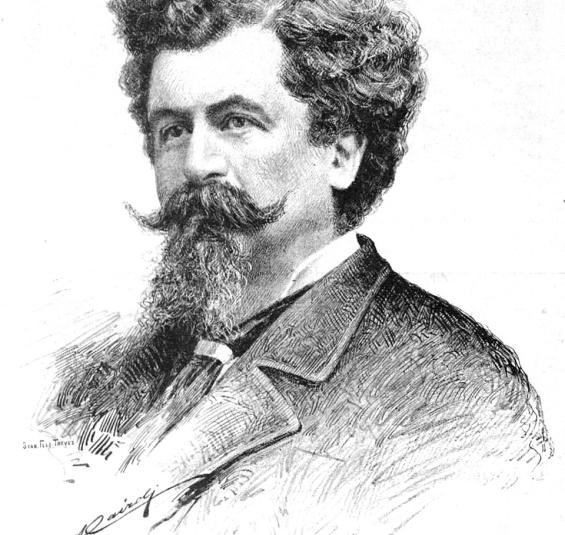
Francesco Barzaghi
Milan 1839 - 1892
Born in Milan in 1839, he attended the studios of Tantardini and Alessandro Puttinati. He then enrolled at the Brera Academy, where he studied under Cacciatori. He studied with Vincenzo Vela, to whom he was stylistically close in his Realist style.
Among his works, what is considered his masterpiece, the equestrian statue of Napoleon III, now in the Sempione Park; Phryne, from 1867, presented in Paris the same year and now in the Galleria d'Arte Moderna in Milan; and Goddess of Flowers (post-1878), also in the same gallery.
He executed religious works for the Milan Cathedral: Saints Hilary, Wenceslas (1865), and Adelaide, and for the Cathedral of Bergamo: Saints Bartholomew and Thomas (1870).
His works celebrating the Risorgimento include the Verdi statue for the foyer of the Teatro alla Scala, the Monument to Alessandro Manzoni in Piazza San Fedele in Milan (1883), the monument to Luciano Manara in the public gardens of Porta Venezia, and the monument to Francesco Hayez (1890) in Piazza Brera. At the Brera Academy building, he sculpted the monument to Count Pompeo Litta Biumi in 1874, inaugurated to commemorate the Milanese historian.
Other statues of his are dedicated to Vittorio Emanuele II in Bergamo (1884), Lodi (1883), and Genoa (1886), and to Garibaldi in Crema and Soresina, both from 1885. For Venice, he created the monument to Niccolò Tommaseo (1882).
In 1880, he was appointed to teach sculpture at Brera, a position he held until his death in 1892.