Fausto Zonaro
Masi 1854 - Sanremo 1929
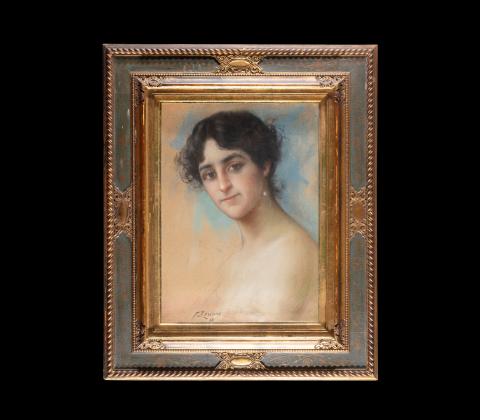
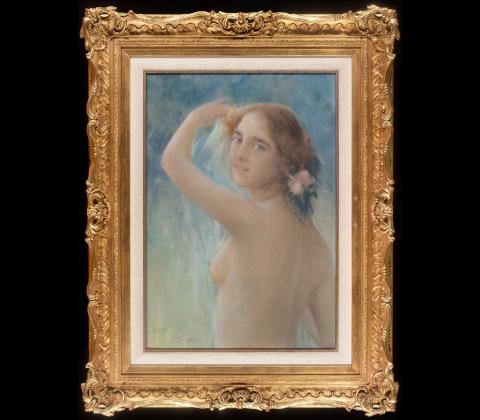
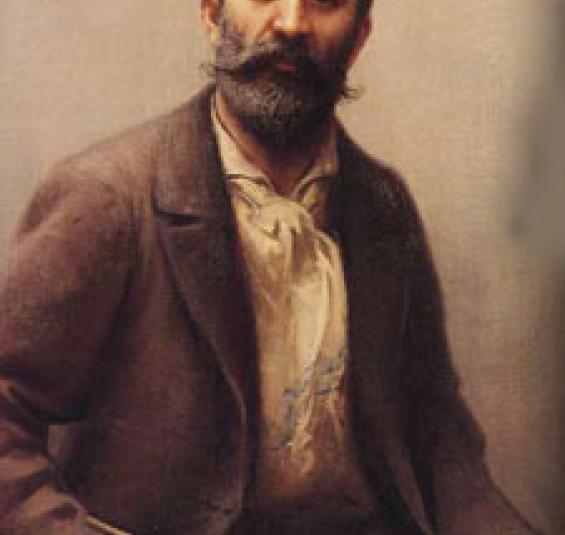
Fausto Zonaro was born in 1854 in Masi, in the province of Padua. He displayed great artistic talent from childhood and, despite coming from a poor family, was sent to study at a technical institute in the province of Rovigo. Later, he enrolled at the Cignaroli Academy in Verona, then directed by Napoleone Nani—one of the most renowned Venetian Verist painters of the time; his fellow students included other future Venetian artists, such as Favretto and Milesi. With the help of patrons, he enrolled at the Academy of Fine Arts in Rome. He subsequently moved to Venice, where he opened a small painting school inside Palazzo Pesaro; during this time, he also received commissions from the Duke and entrepreneur Camerini, a native of Padua. Between 1885 and 1888, Zonaro frequently visited Naples—a city that held a particular fascination for him—and befriended Neapolitan painters, most notably Attilio Pratella. There, he created pastel views of the city and what is considered the masterpiece of his Neapolitan period: the large canvas Il banditore (The Town Crier), painted in 1886. These works were later purchased by Duke Camerini.
His fascination with the bustling, exotic city of Constantinople began with his reading of works about the city—such as novels by French writers Théophile Gautier and Pierre Loti (who had lived in Turkey) and, above all, the 1882 novel by Edmondo de Amicis, which was illustrated by the Roman painter Cesare Biseo.
In 1891, he set off for Constantinople; to support himself financially, he gave Italian and painting lessons to women in the harems of Ottoman nobles. Elisabetta Pante, a former painting student of his, facilitated his initial contacts with the Italian embassy and local institutions; in those early years, Zonaro began to make a name for himself among the city's aristocracy. He held his first informal exhibition at the Zellich bookshop—part of a printing firm founded in 1869 by the Dalmatian Antonio Zellich.
He gained further publicity when his painting The Town Crier (Il banditore) appeared on the cover of the Illustrirte Zeitung in Leipzig. This German weekly was highly popular among the upper middle class, featuring news reports alongside columns on music, art, and theater. Zonaro then approached the offices of Stamboul, a French-language Turkish daily newspaper; the paper published the painting and the news of his arrival in Constantinople, paving the way for meetings and commissions from numerous European embassies. Thanks to the renown generated by the article, the painter struck up a friendship with the Italian minister Rosti, who introduced him to the Italian ambassador, Panza.
News of Zonaro’s reputation reached the Russian ambassador, Alexandr Nelidov, who made a salon in his embassy available for the artist to run a school for the wealthy wives and daughters of European diplomats.
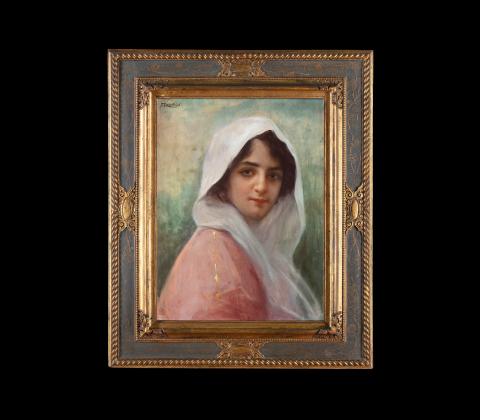
It was Nelidov and Panza who presented the painting The Imperial Ertuğrul Regiment on the Galata Bridge to Sultan Abdul-Hamid II, who purchased it immediately; a great patron of the arts, the sovereign appointed Zonaro Court Painter and granted him a substantial salary. The Sultan commissioned a wide variety of works: portraits of his children, studies from life in the Palace Park, and a series celebrating Mehmed II’s entry into Constantinople on May 29, 1453—a work the sovereign appreciated so much that he gifted Zonaro a three-story mansion in the Beşiktaş district. The painter dedicated the first two floors to a permanent exhibition of his works; the gallery attracted distinguished visitors, including the Prince of Naples, Victor Emmanuel of Savoy, and his wife in 1903, as well as the British Colonel Winston Churchill, the Ottoman army leader Enver Bey, and the Sultan’s nephew, Prince Abdulmecid.
This happy decade in Constantinople came to an abrupt end in 1909 when the aforementioned army leader, Enver Bey, deposed Sultan Abdul Hamid II in a coup d'état and imposed a constitution; the painter was forced to return to Italy and, deeply embittered, never returned to Constantinople. The Zonaro family settled in Sanremo, where the artist organized exhibitions throughout Liguria and opened a permanent studio. He continued painting views of French Riviera cities, accepting portrait commissions from the nobility, and creating Orientalist paintings, all of which met with considerable success.
Fausto Zonaro, who had been named an honorary citizen of Sanremo, passed away in 1929; he was accorded a public funeral.
Many of Zonaro’s works are housed in Istanbul’s most important museums, including the Topkapi Palace, the Dolmabahçe Palace, and the Military Museum. Other paintings are on display at the Uffizi Gallery and the Gallery of Modern Art at the Pitti Palace in Florence, the Gallery of Modern Art in Milan, and the Civic Museum of Padua.