
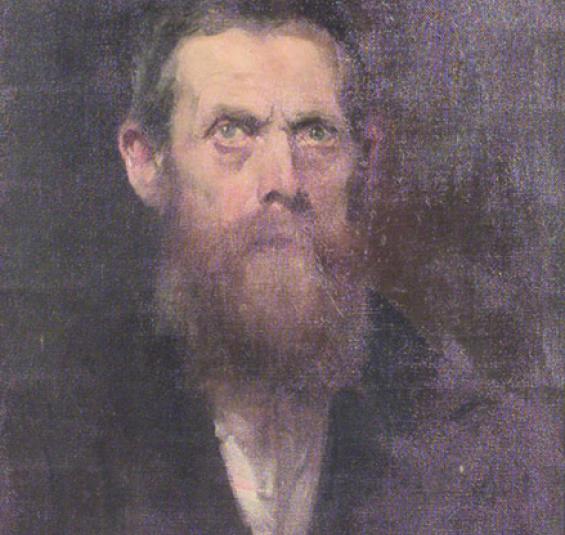
Eugenio De Blaas
Albano Laziale 1843 - Venice 1931
Eugenio de Blaas, also known as Eugene De Blaas or Eugene von Blaas, was born on July 24, 1843, in Albano Laziale. His father, Karl von Blaas, was a distinguished Austrian historical painter and his first artistic mentor. In 1856, the family moved to Venice when Karl accepted a professorship at the Academy of Fine Arts. Eugenio studied at the Academy in Rome and then in Venice, under his father's guidance, where he quickly gained recognition for his talent: in 1860, he won the Selvatico Prize at the Academy, where he began exhibiting.
De Blaas initially focused on religious and historical subjects, later becoming famous for his detailed depictions of Venetian views, portraits of gondoliers, Venetian maidens, and fishermen.
His style was characterized by intense colors, refined drawing, and the great care he took in the creation of costumes and architectural details.
His paintings were particularly popular among wealthy international collectors, especially in Great Britain, where the Victorian public admired his romantic vision of Venice.
Furthermore, de Blaas exhibited his works throughout Europe between 1875 and 1892: in London, Vienna, Paris, Berlin, Munich, Brussels, and St. Petersburg.
He received numerous awards throughout his career, and from 1884 to 1890 he was also honorary professor of painting at the Venice Academy.
He died in Venice on February 10, 1931. Today, his paintings are held in museums and private collections around the world, including institutions in Vienna, Melbourne, Sydney, Leicester, Nottingham, Sheffield, Trieste, and elsewhere. His works remain highly sought-after at auction for their technical excellence and evocative depictions of Venetian life.