Ettore Forti
Rome - Rome
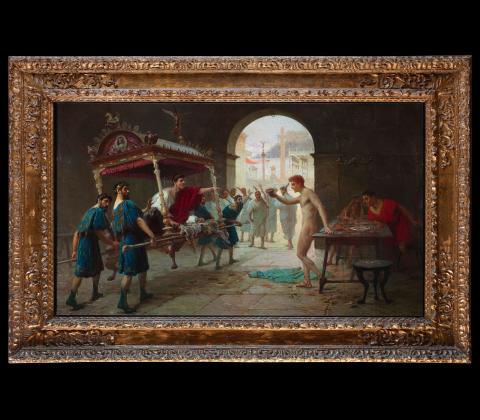
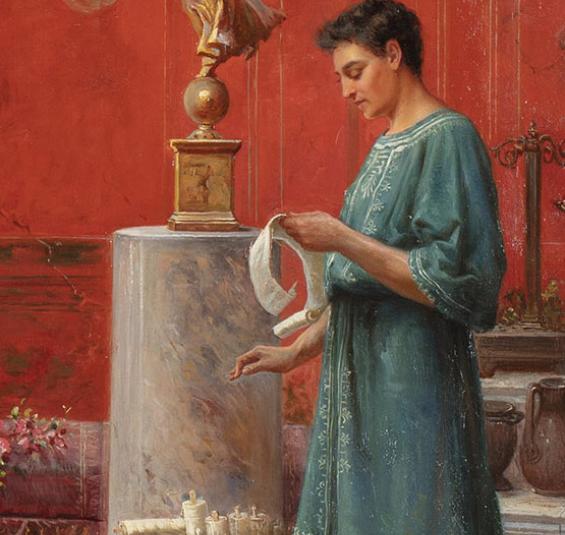
Ettore Forti—also known as Edoardo Ettore Forti—was an Italian painter active primarily in Rome during the final decades of the 19th century. He is recognized as one of the most compelling exponents of Neo-Pompeian painting, a genre that achieved great international success at the turn of the 20th century, partly due to the influence of Sir Lawrence Alma-Tadema—undoubtedly the movement's leading figure.
His body of work focuses largely on scenes set in ancient Rome and Imperial Pompeii, characterized by meticulous archaeological reconstruction, fine attention to detail, and a highly refined painting technique. His works depict elegant patricians, merchants, musicians, and priestesses, as well as chariot races, Roman villa interiors, and lively scenes of daily life, conveying an idealized yet evocative image of the classical world. To achieve a high degree of authenticity, Forti carefully studied archaeological artifacts, architecture, and objects held in the museums and collections of his time.
He exhibited in Berlin between 1893 and 1897, and in 1905, he participated in the exhibition of the Società degli Amatori e Cultori di Belle Arti (Society of Lovers and Connoisseurs of Fine Arts) with two paintings, thereby cementing his reputation within the contemporary art scene. Although he did not attain the same level of fame as some of his contemporaries, Forti enjoyed considerable commercial success, particularly abroad.
Today, Ettore Forti’s works are held in major private collections and museums, including the J. Paul Getty Museum. The art market continues to show significant interest in his paintings, which are prized for their technical excellence, narrative richness, and ability to evoke the daily life of ancient Rome with both elegance and realism.