Cesare Saccaggi
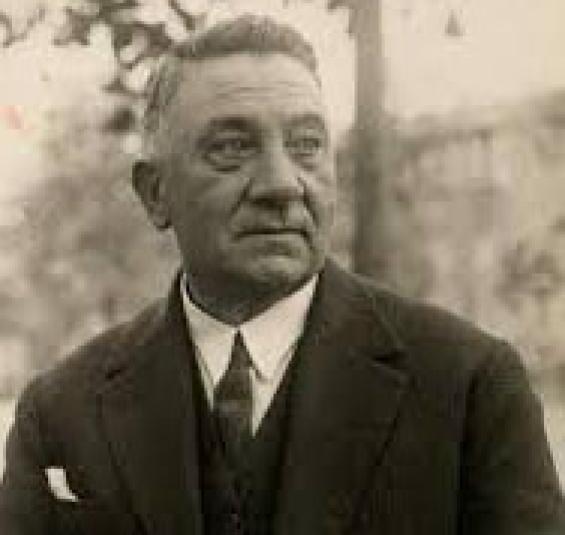
Tortona 1868 - 1934
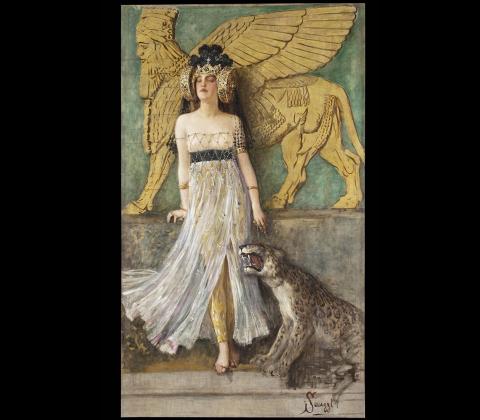
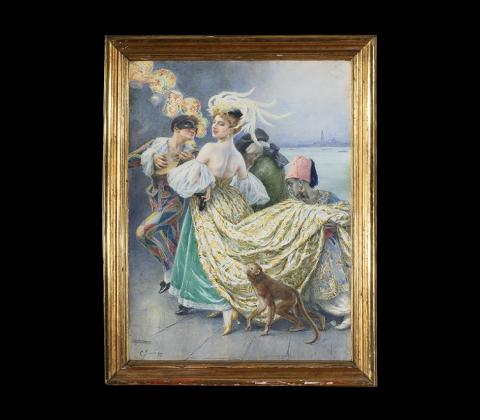
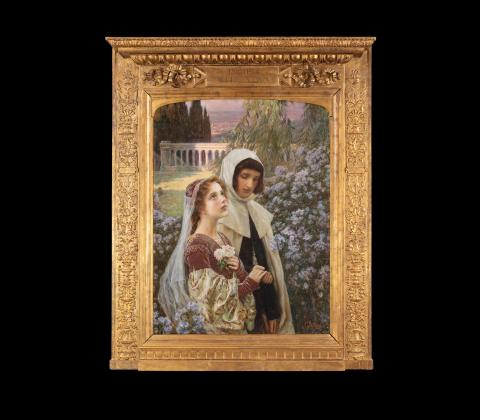
Son of tailors Domenico Saccaggi and Santina Peila, he attended the Albertina Academy in Turin thanks to a 500-lire scholarship from the municipality of Tortona. He was a brilliant student of Giacomo Grosso, Andrea Gastaldi, and Pier Celestino Gilardi. After completing his studies at the Albertina Academy in 1890, he spent a period of advanced training in Rome, where he came into contact with the D'Annunzio-inspired "Byzantine Rome" scene, the painting of the Pre-Raphaelites, and the neo-Pompeian style of Lawrence Alma-Tadema. During the 1890s, his eclectic production ranged from classical and oriental scenes to genre and costume scenes set in bygone eras, from the Middle Ages to the 18th century, to others inspired by a melodramatic verism. He also created the large fresco of the Seventh Station of the Cross in the Church of San Gioacchino (Turin), which was restored in 1943 following the Allied bombing of Turin.
In 1895, he participated in the Permanente in Milan and in three subsequent editions of the Venice Biennale. In 1900, he won the bronze medal at the Universal Exhibition in Paris with the pastel "Alma Natura Ave." At the beginning of the 20th century, he spent several years in Paris, where he participated in the Universal Exhibition and three editions of the Salon, dedicating himself to Art Nouveau graphic design with great success in collaboration with Maison Goupil.
A highly versatile painter, he was skilled in using various media, from pastel to watercolor to oil.
In Paris, he also created advertising works.
His fame, however, is primarily linked to Symbolist themes, where he expressed himself best.
Returning to Tortona, not indifferent to the outbreak of the First World War, he created a series of illustrated postcards entitled "Visions of War," which included the "interventionist" postcards "Redemptio," "The Grandfather," "The Mother," "The Prayer for the Soldier," and the oil "Consolatrix Afflictorum" for the ecclesiastical boarding school in Tortona. Around the 1920s, he embarked on a journey with his student Antonio Enrico (1906-1970), which took him throughout Italy and much of Europe.
He died in Tortona on January 3, 1934, and is buried there in the city cemetery.
In 2008, on the occasion of the exhibition of the same name, a short film about his life, titled "Cesare Saccaggi, between Eros and Pan," curated by A. Fossati, was filmed.