Cesare Maggi
Rome 1881 - Turin 1861
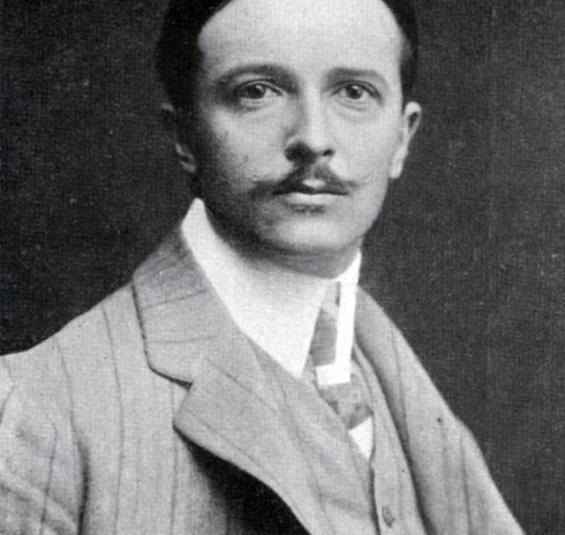
Cesare Maggi was born in Rome on January 13, 1881. He initially pursued classical studies but later turned to painting, studying under Vittorio Matteo Corcos in Florence. He continued his training in Naples under Gaetano Esposito and eventually completed his education in Paris at the Académie Cormon.
He made his debut at the annual exhibition of the Society of Fine Arts in Florence in 1898.
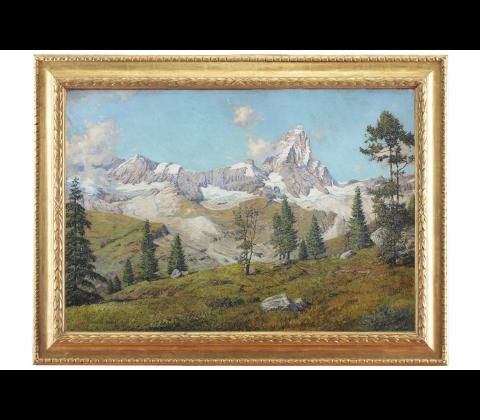
A pivotal moment in his artistic career was his visit to the Giovanni Segantini memorial exhibition in Milan in 1899. He was inspired by Segantini’s Divisionist style and the way he rendered light in his landscapes. Consequently, he traveled to the Engadine region to study Alpine landscapes. During this period, he created his own mountain landscapes using the Divisionist technique, developing a personal style characterized by shimmering light and vivid colors.
Around 1900, Maggi entered into an exclusive agreement with the influential art dealer Alberto Grubicy, who helped establish his reputation as a Divisionist painter throughout Italy. He produced a vast number of paintings depicting the Alpine landscapes of the Engadine and the Aosta Valley.
In subsequent years, he also turned to portraiture, tempering the Divisionist technique with a more relaxed brushstroke. He also painted still lifes and seascapes.
Maggi exhibited regularly at the Venice Biennale; in 1912, an entire room was dedicated to his work, a testament to his growing stature. During the 1920s and 1930s, his style evolved toward broader brushstrokes and simpler compositions, though his fascination with landscape painting remained undiminished. In 1936, he was appointed professor of painting at the Albertina Academy of Fine Arts, where he taught until his retirement in 1951.
He died in Turin in 1961.
Today, he is considered one of the most important Italian landscape painters of the early 20th century. His works are held in major Italian museums and private collections, and are particularly prized for their masterful depiction of snow-capped mountains and the shifting effects of natural light.