
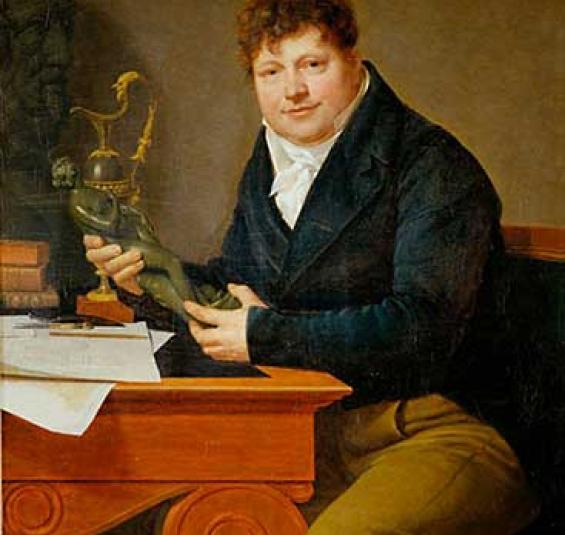
Andrè Antoine Ravrio
Paris 1759 - Paris 1814
André-Antoine Ravrio (1759–1814) is considered one of the most important French bronze makers active between the late 18th century and the beginning of the Empire period. Born in Paris on October 23, 1759, into a family of founders, he received top-tier artistic and technical training, honing his skills in drawing and modeling before dedicating himself to bronze work. In 1777, he earned the title of maître fondeur (master founder), and in 1790, he opened his own workshop, which would go on to become one of the most renowned in the French capital.
Ravrio’s career spanned the transitional period between the Neoclassical taste of the Louis XVI era and the Empire style. His works are distinguished by elegant proportions, precision in chasing, and the exceptional quality of their mercury gilding. He produced monumental mantel clocks, candelabra, incense burners, ornamental vases, wall sconces, and refined decorative bronzes, often inspired by classical antiquity and mythology.
The renown of his workshop attracted commissions from a highly prestigious clientele—including Napoleon Bonaparte, for whom he helped furnish imperial residences. He also collaborated with some of the most celebrated cabinetmakers and bronze makers of his time, such as Pierre-Philippe Thomire and Claude Galle, contributing to the creation of some of the era's most significant decorative ensembles. His creations adorned palaces such as the Tuileries, Fontainebleau, Saint-Cloud, Compiègne, and Versailles, becoming a benchmark for the official taste of the First Empire.
André-Antoine Ravrio died in Paris on December 4, 1814, and was buried in the Père-Lachaise cemetery. To this day, his name remains an essential point of reference for scholars, collectors, and antique dealers interested in French art bronzes from the Neoclassical and Empire periods, thanks to the extraordinary technical quality and timeless elegance of his works.